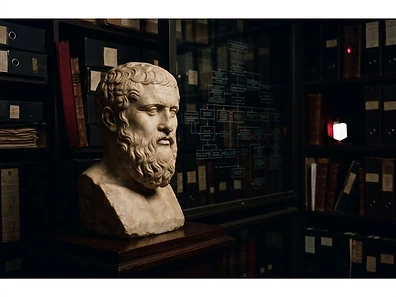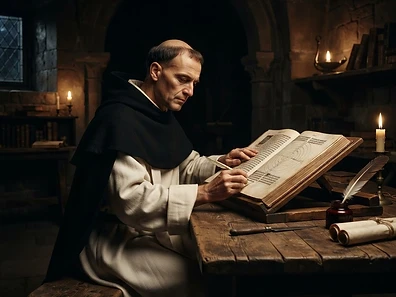
The Order of Being: A Thomistic Grammar of Reality
A reflection on the Thomistic architecture of reality: being before thought, act and potency, form and matter, participation, causality, freedom and the good.
Read essay ↗Marginalia & Essays
Reading, markets, institutions, travel and encounters that continue to shape what I notice and build.
Essays

A reflection on the Thomistic architecture of reality: being before thought, act and potency, form and matter, participation, causality, freedom and the good.
Read essay ↗
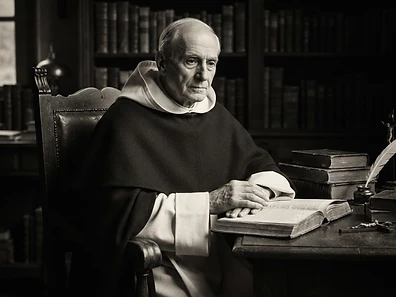
Sertillanges taught me that serious thinking is not merely intelligence, but a discipline of attention, humility, method, memory and submission to truth.
Read essay ↗
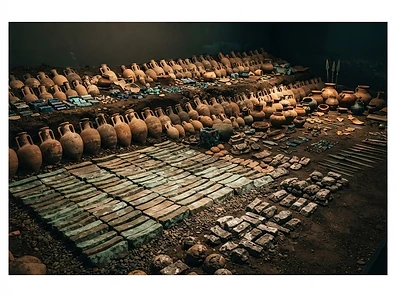
Eric H. Cline’s account of the Late Bronze Age collapse reveals not only how an interconnected world failed, but how societies adapted, recombined and built new orders from its ruins.
Read essay ↗
Robert Harris’s Cicero Trilogy is one of the finest works of historical fiction I have read. Not because it taught me the chronology of the late Roman Republic, which I broadly knew, but because it made me feel it.
Read essay ↗
Twenty years after first reading Plato’s Republic, its questions about function, authority, formation, incentives and institutional decline feel as relevant to organisations as they do to cities.
Read essay ↗
I read Peter Sarris’s Justinian: Emperor, Soldier, Saint in September 2024. I had long been interested in Justinian. By the end of the book, that interest had become admiration.
Read essay ↗
What stayed with me was the book’s demonstration that apocalypticism can migrate across media, periods and social settings while preserving a recognisable structure of meaning.
Read essay ↗
Nearly twenty years after first reading Kirk and Raven, the Presocratics still shape how I think about change, order, mathematical structure and the obligations of reason.
Read essay ↗